Twelve genuinely free things to do in New York
New York is expensive, but its best experiences cannot be ticketed: a ferry, a bridge, a park, a reading room. Here is what is actually free in 2026 — and the exact days and times for the museum windows people get wrong.
- The Staten Island Ferry
- Central Park
- The High Line before 10am
- The Brooklyn Bridge walk
- Brooklyn Bridge Park and DUMBO
- Grand Central Terminal
- The New York Public Library
- Rockefeller Center and Bryant Park
- The free museum windows
- Free summer concerts
- Governors Island, with a caveat
- Self-guided neighbourhood walks
New York's free things are unusual because so many are the reason people come: the skyline from the water, a bridge you can walk across, a park that takes a day to understand. None of the twelve below needs a ticket. Several need you to arrive early, which is the real price.
"Free" in New York sometimes means free to enter but not free to reach. We flag every case where transport costs money, because a paid ferry can still be the cheapest harbour cruise in the city.
1. The Staten Island Ferry
The single best free experience in New York, and it runs all day and all night. The ferry leaves Whitehall Terminal in Lower Manhattan roughly every 30 minutes, crosses in about 25 minutes and returns for nothing at all. On the way out you get the Statue of Liberty off the starboard side and the Lower Manhattan skyline behind you; on the way back, the whole harbour lines up like a stage set.
Stand outside at the back of the boat rather than in the cabin. Avoid weekday rush hours, when the ferry is full of commuters. A round trip takes about an hour if you stay on board, or two hours if you get off at St. George and walk past the ballpark.
2. Central Park
The classic first visit is the southern end: enter at Grand Army Plaza and work north through the Pond, the Mall and Bethesda Terrace to Bow Bridge and the Ramble — a two-hour loop with the city's best people-watching.
If you have more time, the northern end is wilder and emptier — the North Woods and the Harlem Meer feel like a different park. Bring your own coffee and lunch; the vendors inside the park charge for convenience. The horse-drawn carriage rides are not free and are not necessary, and anyone offering a "free" rickshaw tour is selling something.
3. The High Line before 10am
The elevated park built on a former freight railway runs from Gansevoort Street in the Meatpacking District to 34th Street, with the best stretch between 14th and 23rd. It is free and open to all, but it becomes a slow-moving queue of people taking the same photograph by late morning. Enter before 10am and you will have the planting, the benches and the views over the Hudson largely to yourself.
Walk it one way rather than doubling back — north to Hudson Yards or south towards the Village — and combine it with a wander through Chelsea or the West Village. There are lifts and ramps at most entrances, though not every entrance is step-free; the park closes in the evening, so check seasonal hours before planning a sunset visit.
4. The Brooklyn Bridge walk
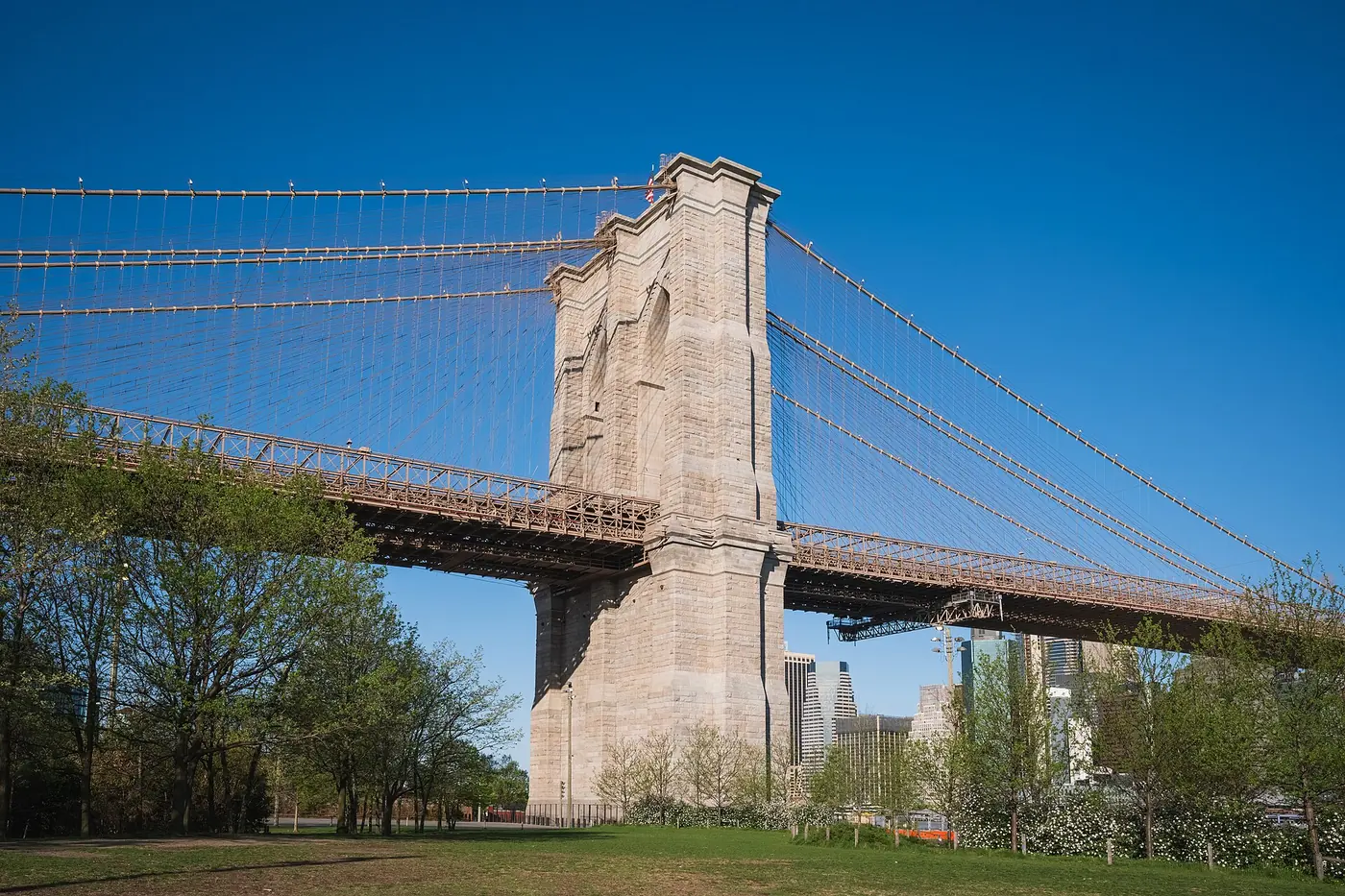
Walking the Brooklyn Bridge is free, takes about 30 minutes at an unhurried pace, and is the best introduction to the city's geography: Lower Manhattan in front of you, the harbour to the right, the subway rumbling underneath. Start on the Brooklyn side before 9am. By midday the photo stops have become a one-way negotiation.
Join the walkway near Cadman Plaza or from the City Hall side coming from Manhattan. Stay in the pedestrian lane and keep right; cyclists are not patient. The reward is breakfast in DUMBO afterwards — or, in heavy rain, skip it, because the walkway has no shelter.
5. Brooklyn Bridge Park and DUMBO
The park along the Brooklyn waterfront is free, and it is where the postcard of the bridge tower is taken from. Walk to Pebble Beach, continue along the piers, and stop in DUMBO for the view up Washington Street, where the bridge frames the Empire State Building between two warehouse blocks. On a clear evening it is the best free skyline view in the city.
DUMBO has become expensive to eat in, so bring a picnic or push on to Brooklyn Heights. The subway at York Street is a short walk, and the whole waterfront strip is free. With children, the playground at Pier 6 is excellent, and there are public toilets along the park.
6. Grand Central Terminal
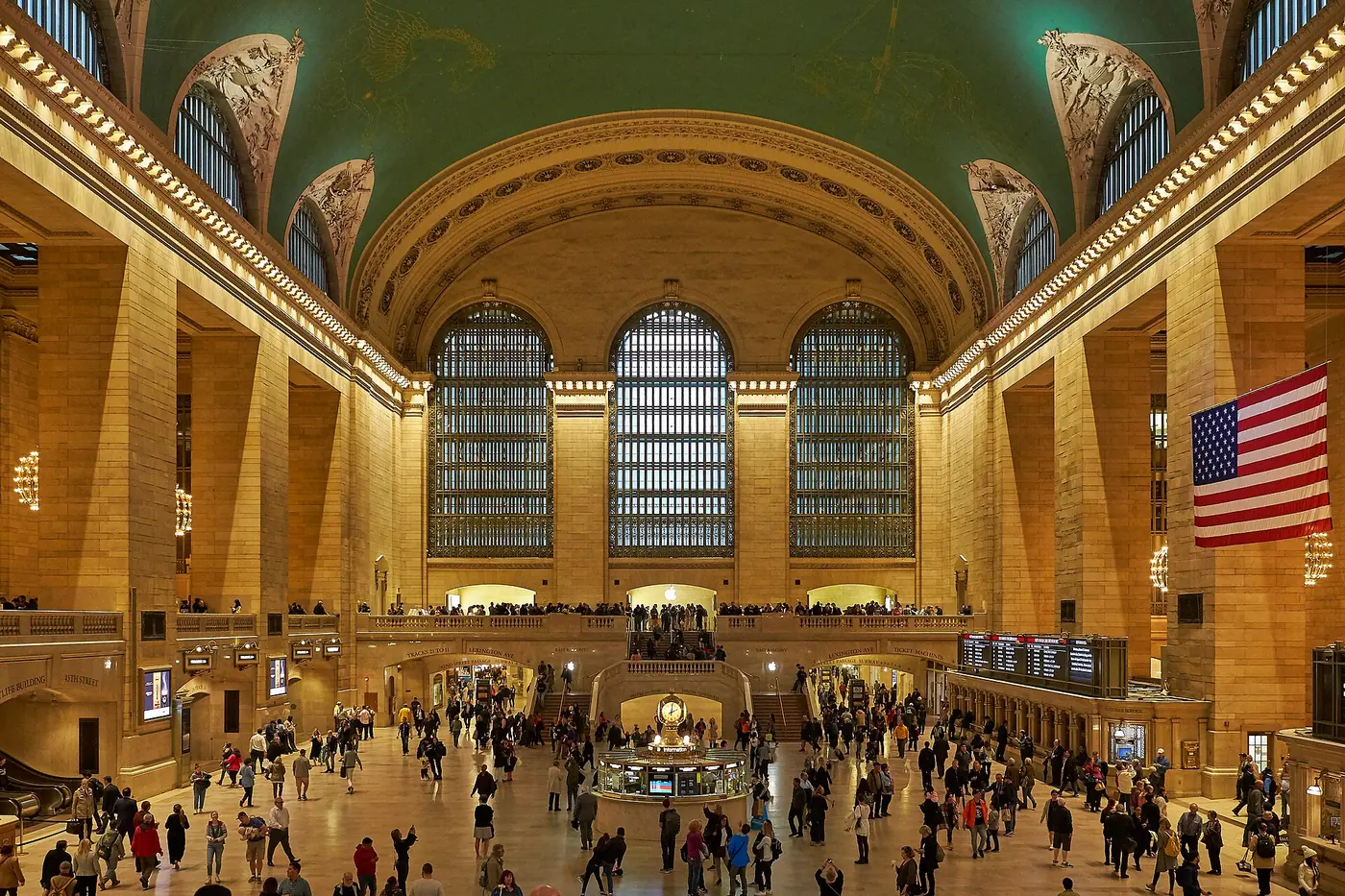
It is a working railway station, not a museum, which is exactly why it is worth 20 minutes of your day. Walk into the Main Concourse, look up at the celestial ceiling, and find the Whispering Gallery outside the Oyster Bar — two people facing the corners can hear each other perfectly across the arch. The building is free to enter and has been the backdrop for a century of arrivals.
Go on a weekday morning for the commuters and the light, or at the weekend if you want to take photographs without apologising. The food hall below is convenient rather than special. The best free thing here is standing still while everyone else rushes, then taking the 7 train one stop to Queens for lunch.
7. The New York Public Library
The Stephen A. Schwarzman Building on Fifth Avenue at 42nd Street is free to enter, and the Rose Main Reading Room is one of the most beautiful public interiors in the world. You do not need a library card to look, though you will need one to borrow. The building also holds free exhibitions and free Wi-Fi, which makes it a useful stop for a wet afternoon.
Enter from the Bryant Park side and take the stairs up; the marble and light do most of the work. Be quiet and remember that people are working here — it is a library first and a landmark second.
8. Rockefeller Center and Bryant Park
The Rockefeller Center complex is free to walk through, and the plaza around the flags is a good Midtown people-watching spot. From early December the Christmas tree dominates everything: the 2026 tree is lit on 2 December and stays lit until around 9 January. Seeing it costs nothing, though the weekend crowd is substantial — go early on a weekday.
Five minutes' walk away, Bryant Park's Winter Village opens on 28 October 2026 and runs to 28 February 2027. The ice rink is free to use; you pay only to hire skates, and the market stalls are free to browse. In summer the same park runs free outdoor films, yoga and reading hours — check the park's own calendar, because the programme changes by season.
9. The free museum windows
This is the item people most often get wrong, because the details change. Here is the current position for the major museums, verified for 2026.
- MoMA: UNIQLO Free Friday Nights, 5.30–8.30pm, New York State residents only; reserve ahead. Everyone else pays $30.
- The Whitney: free Friday nights, 5–10pm, for everyone. Also free on Second Sundays and free daily for visitors aged 25 and under.
- 9/11 Memorial & Museum: the memorial plaza is free 8am–8pm daily. The museum's free window is for New Yorkers on Sundays, 4–7pm, with proof of residence. The old Monday evening window is gone.
- Brooklyn Museum: suggested admission, with free First Saturday evenings.
- Bronx Museum: always free.
- American Museum of Natural History: $28 general admission, $43 with one ticketed exhibition, and pay-what-you-wish for New York, New Jersey and Connecticut residents.
- The Met: $30, closed Wednesdays; pay-what-you-wish for New York State residents and tri-state students only.
Two practical notes. Bring identification if the offer is for residents. These schemes can change with little notice, so check the day before; if you are not a resident, budget for the ticket.
10. Free summer concerts
Between June and September the city becomes a free festival. SummerStage fills Central Park with music and dance; BRIC Celebrate Brooklyn! runs its series in Prospect Park; Lincoln Center's Summer for the City puts opera, jazz and film on the plaza. All of it is free, with no ticket needed for general seating.
Arrive early with a blanket, expect a queue at the gates, and check the programme on the day — weather cancels things and line-ups shift.
11. Governors Island, with a caveat
The island itself is free: 172 acres of car-free paths, old military buildings and one of the best views of the Lower Manhattan skyline. It is open seasonally, and the ferry is the catch — the crossing costs money, so "free" only applies once you are there. Check the fare and timetable first; the service is frequent in summer and limited outside it.
Go on a weekday if you can. Take a picnic, hire a bike if you want to cover the whole island, and allow half a day. It is the closest the city gets to an escape without leaving it, and the ferry ride is a harbour tour in its own right.
12. Self-guided neighbourhood walks
The last free thing is the one that stays with you longest: walking a neighbourhood with no plan and no ticket. New York is a city of distinct quarters, and the best ones reward an unhurried afternoon.
- Harlem: the Apollo Theater, the Schomburg Center and the brownstones around Strivers' Row, plus soul food and jazz in the evening.
- Jackson Heights, Queens: 74th Street and the blocks around it form Little India, and the food is the point.
- Bushwick, Brooklyn: the Bushwick Collective murals, best on a weekday when the streets are quiet.
- Arthur Avenue, the Bronx: the retail market and the Italian-American blocks around it, with Mike's Deli and Zero Otto Nove as landmarks.
- The Lower East Side and Chinatown: tenements, synagogues, dumpling shops and the Tenement Museum.
- Greenwich Village: Washington Square Park, the brownstone side streets and the basement jazz clubs.
Pick one, not four. The mistake is treating neighbourhoods as a checklist; the pleasure is noticing the same bakery on the second pass. Take the subway, get out and walk until you find lunch.
The city's best experiences are free because they are public: a ferry, a bridge, a park, a library. The expensive ones are optional.
Making a free day work
What free actually costs
None of these needs a ticket, but they all need time and often a subway fare. A free day is not a zero-cost day.
Add up the practical bits: two subway rides at $3 each, a coffee and a bagel at $9, lunch at a cheap counter around $12. That is a full, memorable day for roughly $30. Compare it with a single observation deck ticket at $42–47 and the value is obvious. The subway also caps at 12 fares in any rolling seven days, so a week of free sightseeing will not blow the transport budget.
Free museum windows fill up. If a scheme requires a reservation, book it as soon as you know your dates — the free slot is popular precisely because it is free. And keep your expectations honest: the free version of a museum is the same collection, just at a busier time.
Free things, answered
What is the single best free thing to do in New York?
The Staten Island Ferry. It runs 24 hours a day, costs nothing, and gives you a 25-minute crossing with the Statue of Liberty and the Lower Manhattan skyline in view. Take it in the morning and you have had the harbour tour before most people have finished breakfast.
Are any New York museums free all the time?
The Bronx Museum is always free. The Brooklyn Museum is suggested admission, with free First Saturday evenings. Other museums are free only in specific windows — MoMA for New York State residents on Friday evenings, the Whitney for everyone on Friday nights, and the 9/11 Museum for New Yorkers on Sunday afternoons.
Is the Brooklyn Bridge walk free?
Yes, and there is no ticket or booking. Start on the Brooklyn side before 9am to avoid the worst of the crowds. Stay out of the cycling lane and allow about 30 minutes at an unhurried pace.
Is Governors Island free?
The island is free to enter, but the ferry crossing costs money. Check the current fare and timetable first. It is a good value half-day, particularly on a weekday in summer, but it is not a zero-cost outing.
Do I need to reserve free museum tickets?
Some do require a reservation, particularly MoMA's free Friday evenings, and they go quickly. Book as soon as your dates are fixed and bring identification if the offer is limited to New York residents.